How to Choose the Right Event Medical Cover for Motorsport Events in Australia (2026 Guide)
How to choose the right medical cover for motorsport events in Australia — trackside trauma capability, rapid extraction and the standards organisers should expect in 2026.
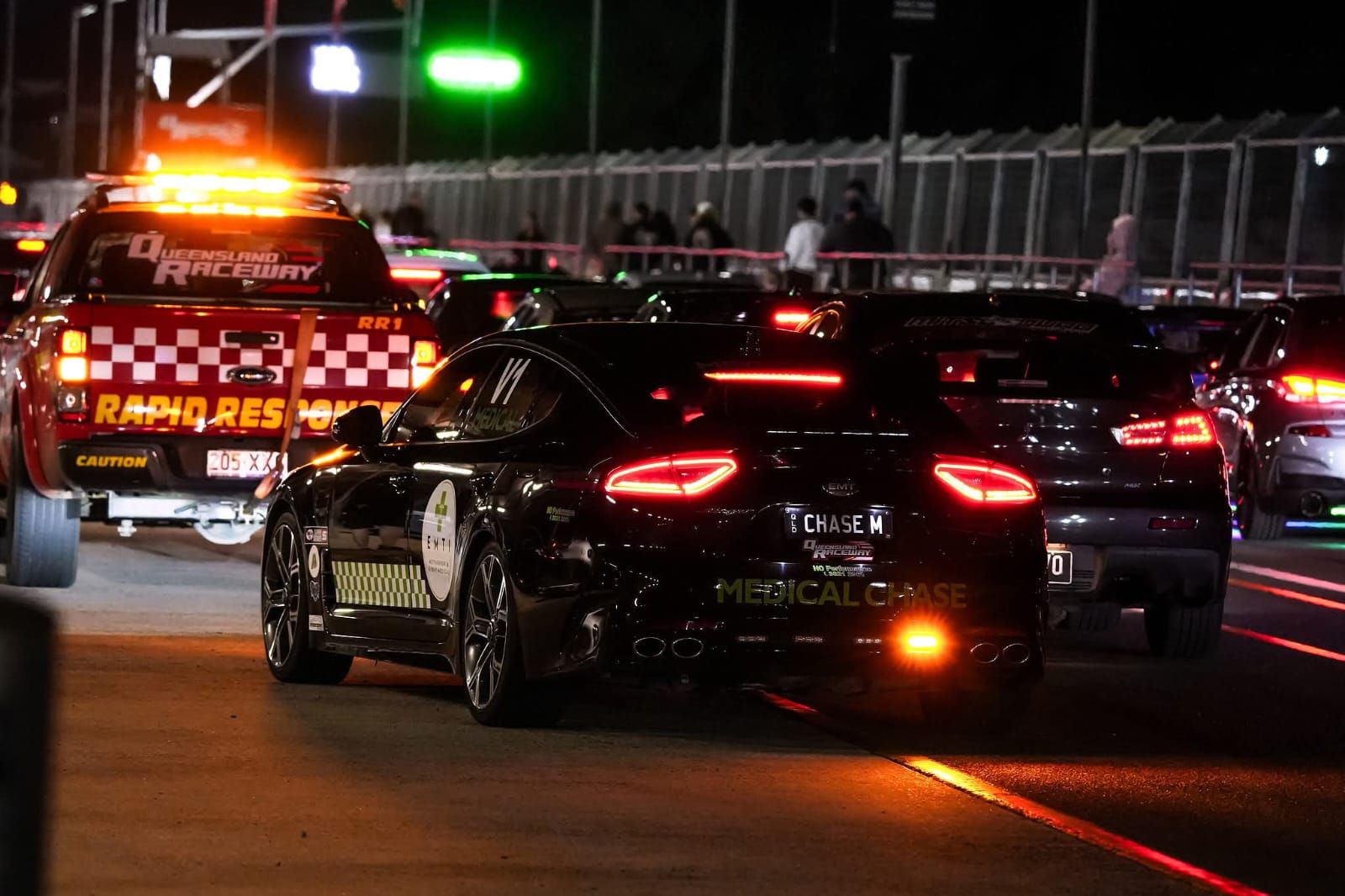
Motorsport is one of the highest-risk categories of public events in Australia. Speeds are high, margins for error are small, and when something goes wrong, the window for effective medical intervention is measured in minutes, not hours.
Whether you are organising a club-level circuit day at Winton, a street race through a CBD precinct, or a large-scale event like a MotoGP round, getting your medical cover right is not optional. It is a condition of your permit, your insurance, and frankly, your duty of care.
The problem is that many event organisers treat medical cover as a checkbox, not a strategy. They book the cheapest option, underestimate staffing needs, or work with providers who lack the specific experience motorsport demands.
This guide walks you through everything you need to know about selecting event medical cover for motorsport events in Australia in 2026 — from understanding your risk profile to briefing your provider and meeting regulatory standards.
Why Motorsport Events Need Specialised Medical Cover
General event medical cover works well for concerts, festivals, and corporate functions. Motorsport is a different environment entirely.
Incidents at motorsport events can involve high-speed impacts, fire, fuel exposure, crush injuries, and entrapment. The response needs to be fast, coordinated, and clinically capable. A first aider with a kit bag is not the right answer when a driver is unconscious in a barrier at 200 km/h.
Motorsport medical services require personnel who understand the specific hazards of the environment — including how to approach a live track, how to work around marshals and safety cars, and how to manage a patient who may be wearing a helmet, HANS device, and a fire suit.
Beyond the track, you also have spectators, pit crews, officials, and support staff to consider. A comprehensive medical plan covers all of them.
Understanding the Risk Profile of Your Event
Before you can choose the right cover, you need to understand what you are actually covering. Every motorsport event has a different risk profile, and your medical plan should reflect that.
Circuit Racing vs. Street Events
Permanent circuits like Phillip Island, The Bend, or Sydney Motorsport Park are purpose-built with safety infrastructure already in place. They have defined run-off areas, barriers, and established emergency access routes. Medical planning at these venues is more predictable.
Street events are more complex. Temporary barriers, variable surface conditions, spectator proximity, and restricted access for emergency vehicles all increase the challenge. Medical teams need to be positioned strategically and briefed on access routes before the event starts.
The type of racing also matters. Open-wheel categories carry different injury patterns to touring cars or motorcycles. Endurance events introduce fatigue-related risks for both competitors and crew. Off-road and rally events may require medical cover across multiple remote locations simultaneously.
Crowd Size and Spectator Risk
Your medical plan cannot focus only on competitors. A 50,000-person crowd at a V8 Supercars round brings its own medical demands: heat illness, cardiac events, alcohol-related incidents, and trip-and-fall injuries.
The ratio of medics to attendees varies by jurisdiction and event type, but a general benchmark used across Australian events is one trained medic per 1,000 attendees at minimum, with higher ratios for events with elevated risk factors.
Australian Regulatory Requirements for Motorsport Medical Cover
Australia has a structured framework for motorsport medical requirements, and non-compliance can result in your permit being denied or your event being stopped on the day.
Motorsport Australia Medical Standards
Motorsport Australia (formerly CAMS) publishes detailed medical requirements for sanctioned events. These specify minimum staffing levels, qualifications, vehicle types, and equipment based on the category of competition.
For example, a National Competition event typically requires a Medical Officer (a registered medical practitioner) to be present, along with a defined number of ambulances and first aid personnel. The exact requirements depend on the speed category and number of competitors.
If your event falls under Motorsport Australia's jurisdiction, you need to work with a provider who understands these standards and can document compliance for your permit application.
State and Territory Obligations
Beyond Motorsport Australia requirements, you also need to meet obligations set by your state or territory government. This can include requirements from:
The relevant health department
WorkSafe or SafeWork authority (for events with workers on site)
Local council conditions of approval
In some states, ambulance cover from a registered provider is a condition of the event permit. In others, you need to demonstrate that your medical plan has been reviewed by a qualified professional.
Getting this wrong does not just risk your permit. It creates significant liability exposure if an incident occurs and your cover is found to be inadequate.
What to Look for in a Motorsport Medical Services Provider
Not every event medical company has the experience or capability to handle motorsport. Here is what to look for when evaluating providers.
AHPRA-Registered Clinicians
Your medical staff should be registered with the Australian Health Practitioner Regulation Agency (AHPRA). This applies to doctors, nurses, and paramedics. AHPRA registration means the clinician has met national standards for training, competency, and professional conduct.
Be cautious of providers who rely heavily on first aiders or unregistered personnel for high-risk motorsport roles. First aiders have an important role in the overall plan, but they should not be the primary clinical resource at an event where serious trauma is a realistic possibility.
Emergency Logistic Solutions (ELS) deploys AHPRA-registered clinicians across the full scope of clinical roles — from first aiders through to doctors — depending on the event's requirements. This means you can scale your cover appropriately without having to coordinate multiple providers.
Vehicle and Equipment Requirements
Ambulance cover for motorsport is not just about having a vehicle on site. The vehicle needs to be equipped for the specific scenarios your event presents.
At a minimum, a motorsport ambulance should carry:
Advanced airway management equipment
Cardiac monitoring and defibrillation capability
Spinal immobilisation equipment
Trauma supplies
Medications appropriate to the clinical scope of the attending staff
Rapid response vehicles are also important for track-side access. These are typically smaller, faster vehicles that can reach an incident quickly while the ambulance is being positioned. At larger events, you may need multiple rapid response units deployed at different points around the circuit.
ELS operates fully equipped ambulances and rapid response vehicles configured for event and industrial environments. Their vehicles are matched to the clinical capability of the staff on board, which matters when you are writing your medical plan for permit purposes.
Command and Communication Capability
Medical cover at a motorsport event does not operate in isolation. Your medical team needs to integrate with race control, marshals, fire crews, and local emergency services.
A good provider will have a clear command structure, designated communication channels, and a pre-agreed protocol for escalating to public ambulance services when needed. They should also be able to provide a Medical Director or senior clinician who can liaise with event officials and sign off on the medical plan.
Staffing Levels: How Many Medics Do You Actually Need?
This is the question most organisers get wrong. The answer depends on several factors:
The category of competition
The number of competitors
The crowd size
The venue layout
The duration of the event
For a club-level circuit day with fewer than 50 competitors and no public spectators, you might meet requirements with a Medical Officer, two paramedics, and one ambulance. For a national-level event with 20,000 spectators, you are looking at a significantly larger deployment.
A practical way to think about it is to map your event into zones: the track, the pit lane, the spectator areas, and any remote or restricted zones. Each zone has its own risk profile and needs appropriate cover.
Your medical provider should be able to help you build this plan. If they cannot, that is a signal they may not have the motorsport-specific experience you need.
ELS offers risk assessment and consulting services specifically for complex environments, which means they can help you work out what you need before you commit to a staffing plan. This is particularly useful if you are running an event format you have not managed before, or if your event has unusual site characteristics.
Common Mistakes Organisers Make When Booking Medical Cover
Understanding what goes wrong helps you avoid the same problems.
Booking too late. Experienced motorsport medical teams get booked out well in advance, especially around major event weekends. If you are planning a 2026 event, you should be having conversations with providers now.
Choosing on price alone. The cheapest quote is rarely the right answer for high-risk events. A provider who cannot document AHPRA registration, vehicle compliance, or relevant experience is a liability, not a saving.
Underestimating the brief. Providers need detailed information to quote and plan accurately. If you give them a vague brief, you will get a generic plan that may not meet your permit requirements.
Ignoring the spectator medical plan. Many organisers focus entirely on competitor cover and forget that spectators represent a significant portion of their medical risk, especially at large events in hot weather.
Not confirming escalation protocols. Your private medical team is not a replacement for the public ambulance system. You need a clear plan for when and how to escalate, and your provider should have an established relationship with local ambulance services.
How to Brief Your Medical Provider Effectively
A good brief gets you a better plan. Here is what to include when you approach a provider like ELS.
Event basics — name, date, location, and format
Competitor details — number of competitors and the category of racing
Crowd size — expected attendance figures
Venue layout — provide a site map if possible, or arrange a site visit
Specific risk factors — high-speed categories, street circuit characteristics, remote access challenges, or unusual site features
Permit requirements — including any Motorsport Australia standards that apply
Timeline — when the medical plan needs to be finalised and submitted for permit approval
Working backwards from your permit submission deadline gives your provider enough time to resource the event properly.
FAQs
Q: What qualifications should motorsport event medics have in Australia? A: At a minimum, medics at motorsport events should hold relevant first aid qualifications. For higher-risk events, you need AHPRA-registered clinicians, including paramedics, nurses, or doctors depending on the event category. Motorsport Australia standards specify minimum qualification levels for sanctioned events.
Q: Do I need a doctor on site at my motorsport event? A: It depends on the category of your event. Motorsport Australia requires a Medical Officer (a registered medical practitioner) for National Competition events. For lower-category events, a senior paramedic may be sufficient. Check the specific requirements for your event category and state.
Q: How many ambulances do I need for a motorsport event? A: This depends on the size and risk profile of your event. A small club day might require one ambulance, while a large national event may need multiple ambulances plus rapid response vehicles. Your medical provider should help you determine the right number based on your event specifics.
Q: Can I use St John Ambulance or a similar volunteer organisation for motorsport medical cover? A: Volunteer organisations can play a role in the overall medical plan, particularly for spectator first aid. However, for track-side medical cover at higher-risk events, you typically need clinicians with specific motorsport experience and the appropriate clinical capability. Check your permit requirements carefully.
Q: How far in advance should I book event medical cover for a motorsport event? A: For major events, aim to book at least three to six months in advance. Experienced motorsport medical teams have limited availability, especially around busy event periods. For smaller events, two to three months is a reasonable minimum.
Q: What is the difference between ambulance cover and event medical cover? A: Ambulance cover refers specifically to the provision of an ambulance vehicle and crew. Event medical cover is broader and includes the full medical plan: staffing across all zones, rapid response vehicles, first aid posts, command structure, and escalation protocols. Motorsport events typically need both.
Q: Does ELS provide medical cover for motorsport events across all Australian states? A: ELS provides event medical cover for a range of events and environments across Australia. You can contact them through emls.com.au to discuss your specific event requirements and location.
Conclusion
Getting your event medical cover right for a motorsport event is not complicated, but it does require planning, the right provider, and a clear understanding of your obligations.
Start with your risk profile. Know your event category, your crowd size, and your venue characteristics. Then find a provider who can demonstrate AHPRA-registered staff, appropriate vehicles and equipment, and genuine motorsport experience.
If you are planning a motorsport event in Australia in 2026, reach out to Emergency Logistic Solutions early. Their team can help you build a medical plan that meets your permit requirements and actually works on the day.