April 26, 2025
What Is Emergency Logistics? A Complete Guide for Australian Businesses
A plain-English guide to emergency logistics for Australian businesses — what it covers, why it matters for high-risk operations, and how to plan for serious incidents.
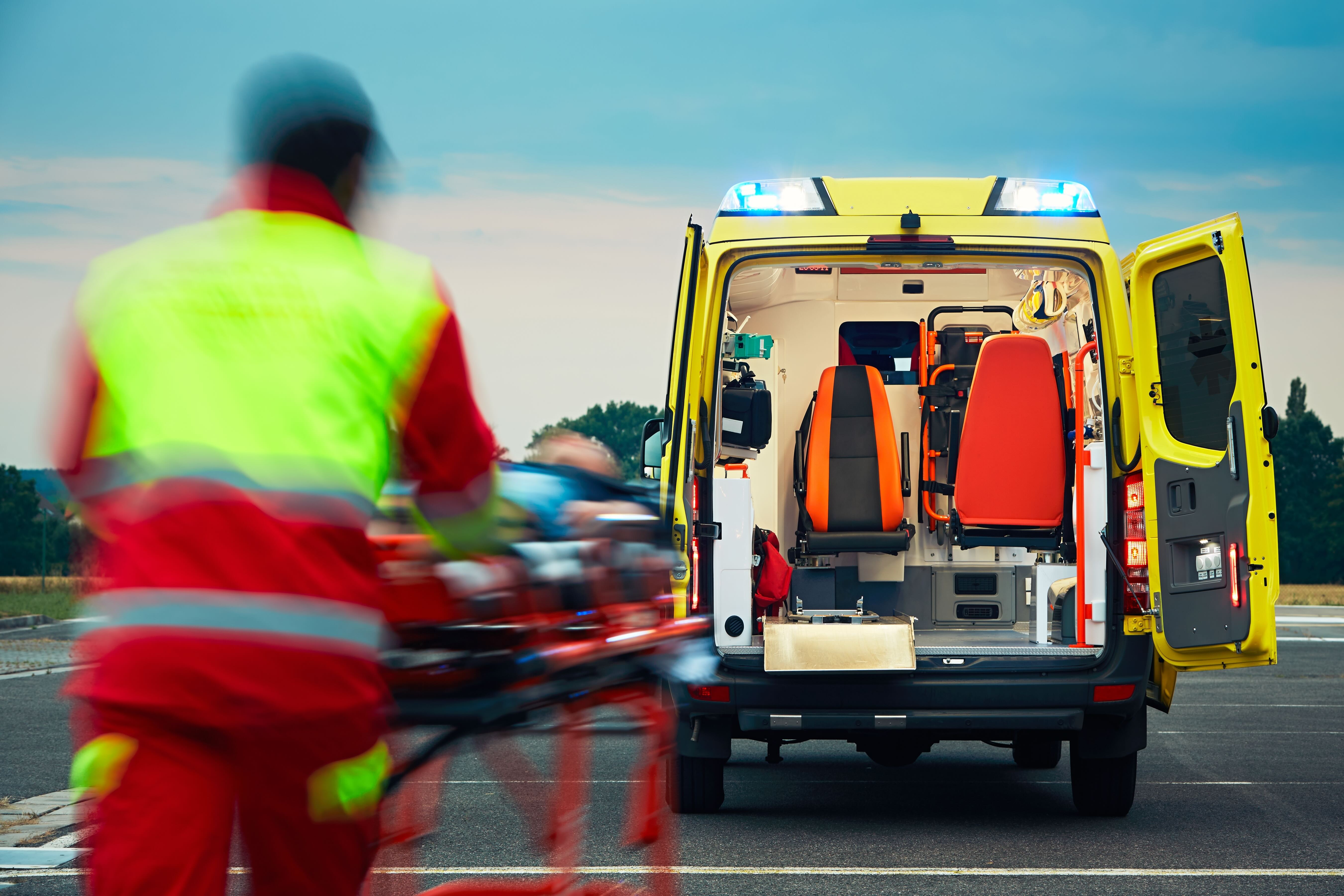
When Normal Planning Isn't Enough
Most operations run on schedules, rosters, and risk registers. But some situations don't wait for a plan. A worker goes down on a remote mining site. A motorsport event draws 20,000 spectators and someone collapses in the crowd. A concert runs late, the crowd surges, and your on-site team is overwhelmed.
These aren't hypothetical edge cases. They happen - and when they do, the question isn't whether you had a plan. It's whether you had the right resources in place before anything went wrong.
That's where emergency logistics comes in.
This guide breaks down what emergency logistics actually means in the Australian context: when businesses and event organisers need it, what it covers, and how to choose the right provider. Whether you're running a large-scale public event, managing an industrial site, or operating somewhere genuinely remote, this is the foundation you need to understand.
What Is Emergency Logistics?
"Logistics" tends to conjure images of freight depots and supply chains. Strip it back, though, and it's a simpler concept: getting the right resources to the right place at the right time.
When lives are on the line, that same principle drives emergency logistics — putting trained medical personnel, specialised equipment, and rapid response capability where they're needed, when they're needed.
In the context of medical and operational safety in Australia, emergency logistics means:
Deploying qualified clinicians and medical teams to events or worksites
Positioning ambulances, rapid response vehicles, and medical equipment where they're needed
Coordinating coverage across complex, multi-zone, or geographically dispersed environments
Responding rapidly when incidents escalate beyond routine first aid
It's not just about having a first aid kit on site. It's about having the right level of clinical capability — matched to the specific risk profile of your operation — ready to act before, during, and after an incident.
Why Emergency Logistics Is Different From Standard Planning
Standard WHS planning covers the basics. You have a first aider on site. You've done a risk assessment. You know where the nearest hospital is.
That's a starting point, not a strategy.
Emergency logistics goes further. It accounts for:
Response time gaps. Out in regional or remote Australia, you might be waiting 45 minutes for an ambulance — and that's on a good day. If your operation is in the Pilbara, the Kimberley, or offshore, state emergency services can't offer the same response times that urban sites take for granted. Emergency logistics puts capability on the ground where it's actually needed.
Scale and crowd dynamics. A 500-person corporate function carries a very different risk profile than a 15,000-person music festival. Emergency logistics scales medical coverage to match actual exposure — number of attendees, activity type, alcohol consumption, weather, terrain.
Regulatory and duty of care requirements. Australian event organisers and employers carry real legal obligations under Work Health and Safety legislation. Appropriate medical coverage isn't optional — it's a compliance requirement in many contexts, and a liability issue in all of them.
Specialist environments. Motorsport, mining, construction, remote drilling — these environments have hazards that general first aid training doesn't address. Emergency logistics providers put clinicians on the ground who actually know the environment they're working in, not just the textbook version of it.
Who Needs Emergency Logistics in Australia?
The short answer: more organisations than realise it.
Event Organisers
Public events — concerts, festivals, sporting events, motorsport, community gatherings — carry inherent medical risk. Crowd density, heat, physical exertion, alcohol, and the unpredictability of large groups all increase the likelihood of incidents.
When something goes wrong at an event, the legal responsibility on the organiser extends well beyond a couple of first aiders near the entrance. Depending on the size and nature of the event, appropriate coverage might include:
Registered nurses or paramedics stationed throughout the venue
A dedicated medical post with resuscitation capability
Roving first aid teams covering different zones
An ambulance or rapid response vehicle on standby
The level of coverage required should be determined by a formal risk assessment — done before every event, not assumed based on past experience.
Industrial and Mining Operations
Australia's resources and construction sectors operate in some of the most remote and hazardous environments on the planet. Sites across Western Australia, Queensland, the Northern Territory, and South Australia can sit hours from the nearest hospital - and when something goes wrong out there, that distance isn't just an inconvenience. It's a clinical reality that shapes every decision you make about on-site medical capability.
A qualified medic who's reachable by phone isn't the answer. You need someone physically present, equipped, and capable of stabilising a patient while evacuation is being arranged. That means:
FIFO medical officers or paramedics for remote sites
Occupational health nurses for ongoing workforce health management
Rapid response capability for high-risk activities like blasting, heavy machinery operation, or confined space work
Motorsport and High-Risk Sport
Motorsport events - from grassroots club days to professional circuit racing - operate under strict safety regulations that mandate specific levels of medical coverage. The same applies to mountain biking, equestrian, contact sports, and adventure racing.
Experience matters here. A paramedic who's worked trackside understands crash dynamics, extraction techniques, and motorsport-specific injuries in ways that general emergency training simply doesn't cover. Across high-risk sports, the requirement is the same - clinicians who know the environment they're operating in, not just the clinical theory behind it.
Remote and Fly-In Fly-Out Operations
When your workforce operates beyond the reach of standard emergency services, there's one question that needs a clear answer: what happens when something goes wrong?
Construction camps, offshore marine operations, exploration teams, isolated agricultural operations — they all face the same problem. In these settings, effective emergency logistics usually means combining on-site medical personnel with telemedicine support and well-defined escalation protocols. Everyone needs to know exactly when and how a patient moves toward definitive care — before an incident happens, not during one.
Corporate and Private Events
Medical coverage isn't just a festival problem. Corporate functions, private events, film productions, and large conferences all carry genuine risk — and the people organising them carry genuine duty of care obligations. A smaller headcount doesn't reduce that responsibility; it just changes the shape of it.
What Does Emergency Logistics Actually Include?
The scope of services varies by provider and by client need. Here's what a capable provider should be able to bring to the table.
Clinical Personnel
Any deployment stands or falls on the quality of its clinicians. In Australia, that means AHPRA-registered professionals — held to the same national standard as those working in hospitals and general practice.
Depending on the risk profile, this might include:
First aiders — for lower-risk events with basic medical needs
Registered nurses — where a higher level of clinical assessment and care is required
Paramedics — for environments needing advanced life support capability
Doctors — for the highest-risk environments, remote operations, or situations where rapid clinical decision-making is critical
The right mix comes from a proper risk assessment, not a one-size-fits-all template.
Equipment and Vehicles
Even the most skilled clinician needs the right tools. A comprehensive provider supplies medical kits matched to the environment, defibrillators and resuscitation equipment, ambulances or rapid response vehicles when required, and trauma supplies for serious incidents. Remote operations often need additional equipment like telemedicine capability and satellite communications.
Risk Assessment and Planning
Effective emergency logistics begins well before anyone arrives on site. A thorough pre-deployment risk assessment identifies the nature and severity of likely medical incidents, the number of personnel and coverage zones required, response time targets and escalation pathways, and how the deployment integrates with state emergency services and hospitals.
This isn't paperwork for its own sake. It's the difference between a reactive response and a prepared one.
Medical Staffing Supply
Some organisations don't need a fully managed service — they need qualified clinical personnel to fill gaps in their existing team. Medical staffing supply gives businesses access to AHPRA-registered clinicians on a flexible or contract basis, without the overhead of permanent employment.
Training
Prevention is always preferable to response. Providers with training capability can upskill your existing workforce in first aid, CPR, emergency response procedures, and scenario-specific protocols — reducing both the frequency and severity of incidents before they occur.
The Australian Regulatory Context
Operating in Australia means navigating specific legal obligations around workplace safety and duty of care.
Work Health and Safety legislation is now largely harmonised across states and territories, and it's unambiguous: employers must protect their people as far as reasonably practicable. For remote or high-risk operations, that doesn't mean having a hospital theoretically within reach — it means having appropriate first aid facilities and trained personnel physically on site. Public events add another layer on top of that. Most jurisdictions set minimum medical coverage standards based on attendance thresholds, and those standards vary depending on the state and the nature of the event. Falling short doesn't just create risk — it can mean permits refused or events shut down on the day.
AHPRA registration is the national standard for clinical practitioners in Australia. When engaging medical personnel for events or sites, verifying AHPRA registration is non-negotiable — it's the baseline assurance that a clinician has met national competency standards.
Working with a provider that understands these requirements — and can document compliance — protects both the organisation and the individuals responsible for making the call.
How to Choose an Emergency Logistics Provider in Australia
Not all providers are equal. When evaluating options, a few things are worth examining carefully.
Clinical credentials. Are the clinicians AHPRA-registered? What is their scope of practice? Can the provider supply different levels of clinical capability depending on the risk profile of the operation?
Relevant experience. A provider with strong event experience isn't automatically the right choice for a remote mining operation. Look for demonstrated experience in environments similar to yours.
Equipment and vehicle capability. Does the provider supply fully equipped ambulances and rapid response vehicles, or are they relying on your existing infrastructure?
Risk assessment capability. Can the provider conduct a formal pre-deployment risk assessment and supply documentation? This matters for both compliance and operational effectiveness.
Scalability. Can coverage flex as requirements change? If something escalates on the day — or the brief shifts at short notice — can the provider move with it?
Integration with state services. A provider worth working with operates alongside state ambulance services, hospitals, and emergency management frameworks — not independently of them.
Common Misconceptions About Emergency Logistics
"We have a first aider on site — that's enough."
For a small, low-risk environment with straightforward access to emergency services, that might genuinely be the case. But it's a narrow set of circumstances. At large events, remote sites, or in high-hazard industries, the gap between a first aider and a paramedic or doctor is substantial — in training, in scope of practice, and in the equipment they can actually use.
"State ambulance services will cover us."
State ambulance services are a critical part of the emergency response ecosystem, but they're not a substitute for on-site medical coverage. In urban areas, response times average several minutes — long enough for an untreated cardiac arrest to become fatal. In remote areas, that can stretch to hours. On-site emergency logistics capability bridges that gap.
"We've never had an incident, so we don't need it."
Past performance isn't a reliable indicator of future risk. The absence of incidents doesn't mean the risk doesn't exist — it may mean you've been fortunate. Risk assessment is about identifying exposure, not just reviewing history.
"It's too expensive."
The cost of appropriate medical coverage is real. So is the cost of an inadequate response: WorkCover claims, litigation, reputational damage, and — most importantly — preventable harm to people. Framed correctly, emergency logistics is risk management, not overhead.
What ELS Does
Emergency Logistic Solutions (ELS) deploys AHPRA-registered clinicians — from first aiders through to doctors — along with fully equipped ambulances and rapid response vehicles, to cover events and industrial operations across Australia.
ELS works with event organisers, mining and resources companies, motorsport organisations, and businesses operating in remote or high-risk environments. The service offering spans tailored medical coverage, medical staffing supply, training, risk assessment, and consulting for complex or specialist operations. Each engagement starts with a genuine understanding of what the operation actually involves — because the goal isn't to hand over a standard package and hope it fits. It's to put the right clinical capability in the right environment, every time.
Conclusion
Emergency logistics isn't a niche service reserved for extreme situations. It's a practical, necessary part of running events and operations responsibly in Australia — particularly in remote environments, high-risk industries, and large-scale public gatherings.
Know your risk, deploy the right capability, and build a plan that holds up when it's tested. That's the principle. The harder part is making sure the right people, equipment, and protocols are locked in before anything goes wrong — not pulled together in response to it.
If you're responsible for an event, a worksite, or an operation where people's safety depends on your decisions, emergency logistics deserves serious attention.
Learn more about how ELS can support your operation at emls.com.au.