The Clinical Director’s Blueprint: Navigating pre-hospital risk, medical governance and the evolution of emergency medicine
Dr Daniel Bitmead explores pre-hospital medical governance, remote clinical support and the role of AI in high-risk industrial and motorsport environments.
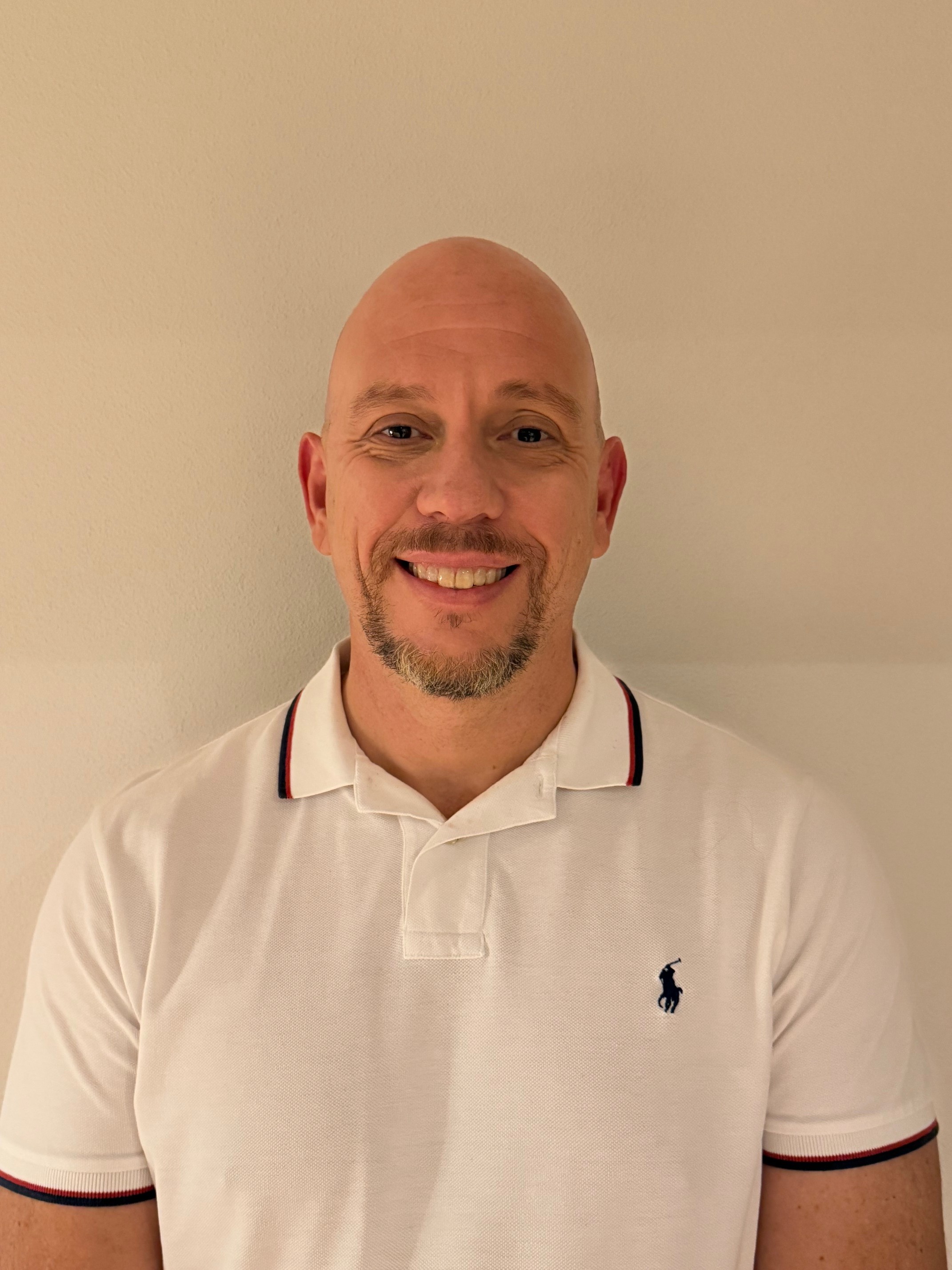
An Executive Q&A with Clinical Emergency Physician Dr Daniel Bitmead on Managing High-Stakes Pre-Hospital Operations, De-Risking Dynamic Work Environments, and the Role of AI in Modern Healthcare.
Overview:
In high-risk industrial environments, major motorsport events, and remote primary production sites, the line between an operational delay and a critical event often rests on pre-hospital medical governance. Emergency Logistics Services (ELS) operates at this exact intersection - providing high-level paramedic coverage, specialised trauma extraction, and site-specific medical risk mitigation across Australasia.
At the centre of ELS’s clinical governance framework is Dr Daniel Bitmead, a veteran Clinical Emergency Physician with nearly three decades of frontline, helicopter retrieval, and healthcare management experience. In this exclusive executive Q&A, ELS Managing Director Jeremy Collins speaks with Dr Bitmead to examine the mechanics of remote medical direction, the operational differences between dynamic raceways and industrial work sites, and how frontline medical leadership evaluates emerging technologies like artificial intelligence.
The Emergency Logistics Solutions Executive Q&A
Q1: Dr Bitmead, to establish the framework for our governance model, could you outline your clinical background and what initially drew you to emergency medicine?
Dr Daniel Bitmead: I graduated from medical school in 1997, which places me at roughly 28 years of active clinical practice. My path into medicine began early - around age seven or eight - driven by a core interest in acute problem-solving and human physiology.
I specialised in emergency medicine under the Australasian College for Emergency Medicine (ACEM). Emergency medicine is uniquely diagnostic: we are experts in early-stage stabilisation, rapid risk stratification, and working through complex clinical presentations with often incomplete data sets.
Over the course of my career, I have held dual roles across the public and private sectors in Queensland, including clinical leadership positions within large public hospitals. Crucially for my role with ELS, I also spent a decade in pre-hospital retrieval medicine operating on rescue helicopters. That environment strips away the physical infrastructure of a tertiary resuscitation bay and forces you to execute high-level clinical decision-making with finite resources, which is the exact reality faced by field paramedics every day.
Q2: Emergency Logistics Services (ELS) operates under a formal Medical Director model. Can you explain how that governance structure works in practice between you and our field paramedics?
Dr Daniel Bitmead: Paramedics operating in the field are highly skilled, AHPRA-registered clinicians who excel at acute pre-hospital stabilisation. However, best-practice clinical governance requires an overarching medical authority - a medical director model - to establish, audit, and authorise the scope of clinical practice.
In practical terms, my role with ELS operates on two distinct levels: administrative governance and real-time clinical support. On the governance side, I review, refine, and formally authorise our clinical practice guidelines, drug protocols, and treatment algorithms. We ensure that every intervention carried out on-site aligns with current national trauma and resuscitation standards.
On the operational side, I act as an immediate escalation point. If an ELS paramedic encounters a complex patient, a severe mechanism of injury, or a scenario requiring high-risk drug administration or specialised hospital bypass, they contact me directly via phone or satellite link. The paramedic provides a structured clinical handover, transmits diagnostic telemetry such as 12-lead ECGs, and we evaluate the risk profile together. It provides our field staff with an immediate, specialist-level soundboard while maintaining total accountability over patient outcomes.
Q3: In a resuscitation bay, you have access to diagnostic imaging, laboratory support, and multi-specialty teams. In a field environment, you are relying entirely on the paramedic’s assessment. How do you approach that communication dynamic?
Dr Daniel Bitmead: It requires a standardised, highly disciplined approach to clinical handovers. When a junior doctor presents a case to me in a hospital, I have the luxury of walking across the room to examine the patient myself. In a remote or trackside environment, I am entirely dependent on the paramedic’s clinical examination, history-taking, and diagnostic reporting.
Having worked previously in retrieval coordination centres and on rescue helicopters, I am accustomed to processing clinical data remotely. The paramedic presents the vital signs, patient history, physical examination findings, and environmental constraints. We evaluate the risk mitigation strategy: Can this patient be definitively managed on-site? Do they require transport to a regional facility? Or do we need to escalate immediately to state retrieval services (such as QAS or RSQ) for aeromedical evacuation?
Because our team operates with standardised clinical protocols, those telephone consultations are concise, deliberate, and focused purely on executing the safest patient outcome.
Q4: ELS deploys medical teams to vastly different operating environments - from high-speed motorsport events like Queensland Raceway to static industrial and manufacturing facilities. How does the medical risk profile differ between these environments?
Dr Daniel Bitmead: The distinction lies heavily in the mechanism of injury and environmental predictability.
In a dynamic motorsport environment, the potential energy involved in collisions is extraordinary. While modern race vehicles feature sophisticated safety engineering—such as roll cages, HANS devices, and multi-point harnesses that mitigate certain impact forces—the risk of high-velocity deceleration injuries, complex extrications, or sudden airway compromise remains high. The clinical team must be expert in vehicle extrication protocols, spinal immobilisation, and rapid transport coordination. Furthermore, trackside logistics require an intimate knowledge of local trauma networks. For example, at Queensland Raceway, Ipswich Hospital sits roughly 30 minutes away, whereas higher-tier trauma care may require secondary transfer.
Conversely, in an industrial, manufacturing, or mining environment, the risk matrix shifts toward machine entrapment, crush injuries, toxic chemical exposure, or localised atmospheric hazards. The operational challenge there is often spatial isolation - how far away is the nearest tertiary facility, and what are the extraction hurdles within a complex industrial plant? In both cases, the baseline medical protocols remain rigorous, but the pre-event planning must adapt to the specific physical hazards of the site.
Q5: You mentioned earlier that remaining calm under pressure is a prerequisite in emergency medicine. How does that mindset translate into managing operational teams during a crisis?
Dr Daniel Bitmead: There is a well-known axiom in emergency training: When you step into a resuscitation room, the first pulse you take is your own.
In a high-acuity event, emotional contagion is real. If the clinical leader or senior practitioner displays anxiety or panic, that friction disseminates through the entire team, leading to cognitive overload and procedural delays. If the leader remains calm, deliberate, and structured, the entire team operates in an ordered fashion.
Emergency teams drill continuously so that when a high-stress event occurs, they fall back on process rather than panic. Everyone knows their specific role, whether it is airway management, vascular access, or telemetry logging. My objective, whether in the hospital or advising an ELS paramedic on the phone, is to maintain that psychological safety and clinical clarity.
Q6: Looking broadly at the healthcare landscape, artificial intelligence and automated diagnostics are advancing rapidly. How do you view the integration of AI within emergency and pre-hospital medicine?
Dr Daniel Bitmead: AI is undoubtedly going to be a transformative operational tool across all healthcare sectors. We are already seeing ambient AI scribes capturing clinical consultations and automating medical record integration, which removes an immense administrative burden from clinicians. On the diagnostic side, AI algorithms are becoming increasingly sophisticated at assisting with initial 12-lead ECG interpretation and preliminary radiological triage.
However, from a clinical leadership perspective, the critical challenge is managing the interface between technology and fundamental clinical competence. An AI model can analyse data points, but it cannot replace clinical intuition, physical examination, or the ability to process environmental nuance in a chaotic pre-hospital setting.
Furthermore, AI models are not infallible. If a junior clinician or field operator relies passively on an automated diagnostic tool without possessing the deep foundational experience required to audit and cross-examine that output, the risk of misdiagnosis increases. In medical governance, our focus over the next decade will be establishing safe operating parameters - ensuring AI serves as an operational force multiplier rather than a substitute for clinical rigour.
Summary Specifications: Emergency Logistics Specifications
Clinical Governance: Led by Specialist Emergency Physicians (ACEM accredited).
Core Capabilities: Pre-hospital emergency management, industrial site medical coverage, event trauma response, and medical risk consulting.
Operational Reach: High-risk industrial, mining, corporate, and major motorsport precincts across Australasia.
Governance Model: Integrated Clinical Practice Guidelines (CPGs), real-time medical direction telemetry, and full AHPRA-aligned paramedic oversight.