Trackside medical response times: what separates advanced care from standard first aid
What shapes trackside medical response, how clinical scope differs from first aid, and what organisers should ask when planning motorsport medical cover.
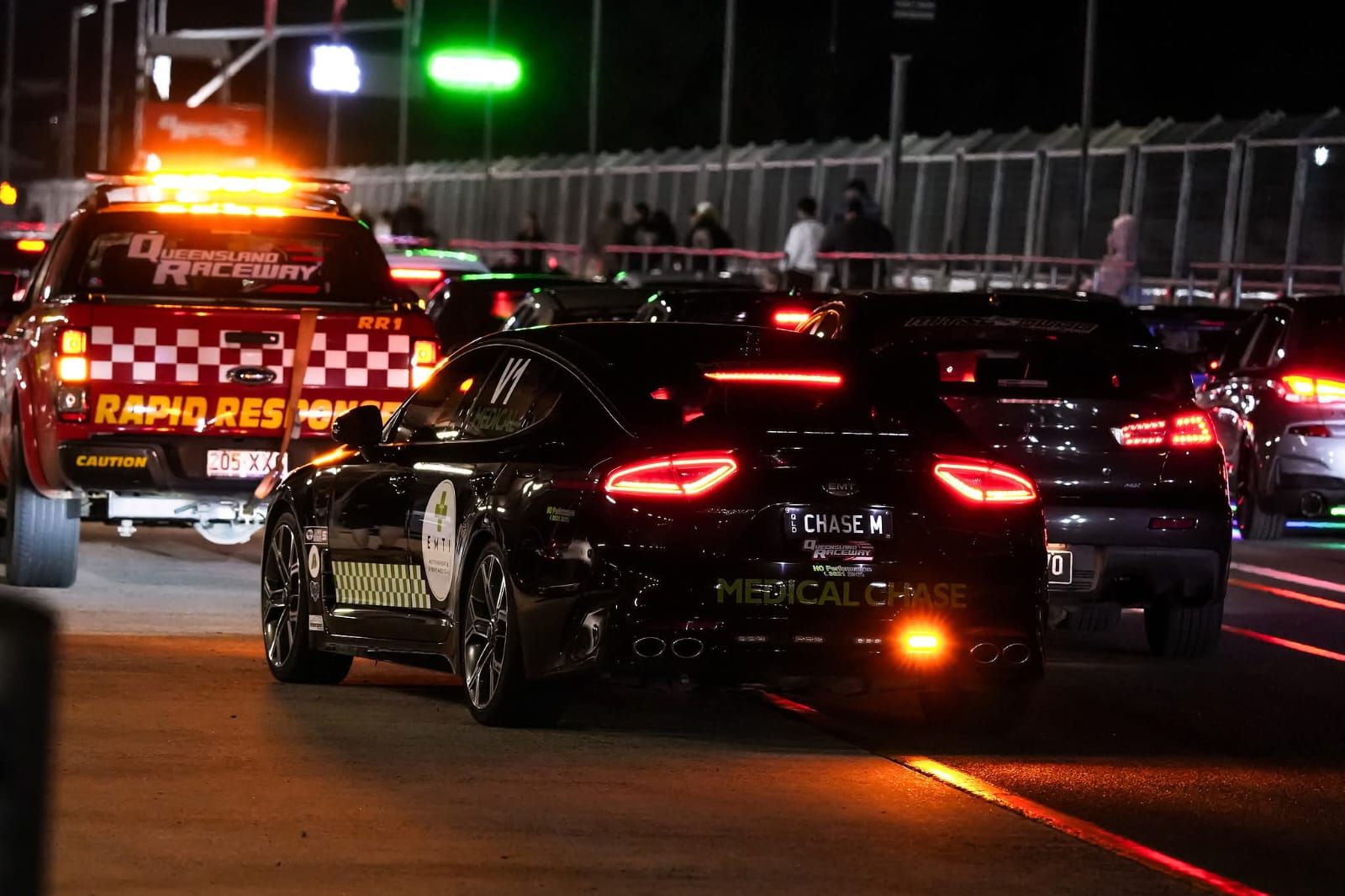
Trackside medical response is shaped less by a single number than by how a medical plan is built around a circuit. For an organiser comparing providers, the more useful question is what the first clinician to reach a driver is registered, trained and licensed to do on arrival. For broader event cover, see our Event Medical Services.
This explainer sets out the factors that govern response time at a closed track, then compares the scope of a standard first-aid crew with that of an AHPRA-registered advanced care paramedic or nurse. It is written for organisers who already accept they need medical cover and want to specify it properly.
What response time actually means at a motorsport event
Response time at a circuit is governed by position, access and preparation, not by a figure quoted in a brochure. A closed track has no public road network to cross, so the time a crew takes to reach an incident depends on where clinicians and vehicles are stationed around the circuit, how quickly they can enter the track under race control’s direction, and whether the route to each corner has been walked and briefed beforehand.
That is a different question to the ambulance-service response times many readers are used to comparing. At an event, the provider chooses the positioning, which means an organiser can ask to see it. Motorsport Australia’s circuit race permit resources include medical response plan pro formas, a sample plan, a checklist and an emergency services information sheet, a sensible reference for what a plan should document.
Ask a provider for the plan itself: where each crew sits, how a crew is called, and how a patient moves from the track to onward care. Any timing target in a plan should come from the provider’s own documented operating standard, not from a general claim.
What a standard first-aid crew is trained and equipped to do
A first-aid crew is trained to stabilise a patient, perform CPR and manage basic wounds until further help arrives. Those skills matter at any event, and first-aiders have a legitimate place in a medical plan, especially in spectator areas and for minor injuries. The comparison here is one of scope of practice, not effort or intent.
A first-aid certificate is a short course with clear boundaries. It does not extend to administering scheduled medicines or to the clinical assessment of a patient with significant trauma. Where a serious incident is a realistic possibility, a plan built only on that scope relies on a state ambulance service for everything beyond stabilisation.
What an advanced care paramedic or registered nurse adds
Advanced care paramedics, registered nurses and doctors add registered clinical judgement and, where licensed, the authority to administer medicines on site. Each is registered with the Australian Health Practitioner Regulation Agency (AHPRA), and an organiser can check any named clinician on the AHPRA public register.
Drug authority is set state by state. NSW Health licenses private paramedic companies to obtain scheduled medicines for the paramedics they employ or engage, and Queensland sets its own rules for medicines. ELS clinicians are AHPRA-registered paramedics, nurses and doctors operating under Queensland and New South Wales drug licences. That scope allows trauma stabilisation and drug administration to begin trackside, ahead of a state ambulance service arriving.
This section describes credentials, not outcomes. Registration and licensing set out what a clinician is permitted to do; they say nothing about how any single incident will unfold.
Why this matters for event organisers
A sanctioning body, venue, or insurer may ask an organiser to document the medical arrangements for an event, and the organiser remains responsible for duty of care either way. A specification that names credentials is easier to check than one that names a headcount. An advanced care crew carries a cost premium over first-aid-only cover, and whether that premium is warranted depends on the event’s risk profile rather than on any provider’s price list. Four questions put the difference on paper, and they are the basis for making that call:
Registration: is every clinician on site AHPRA-registered, and can each be found on the public register?
Drug licences: which state licences does the team hold, and do they cover every state the event touches?
Positioning: where do crews and vehicles sit, and how are they called by race control?
Escalation: how does a patient move from the track to a hospital or a state ambulance service?
Our guide on choosing event medical cover for motorsport events in Australia takes the specification further, and AHPRA-registered paramedics versus first aid officers covers the scope distinction in more detail for work sites.
Scoping a motorsport medical response plan
Talk to ELS about the clinical response level your event needs on the day. The Motorsport Medical & Trackside Response service covers trackside trauma teams, medical chase vehicles and rapid extraction, with pre-event planning built around your circuit. Queensland organisers can also read what to look for in an event medical provider before they brief a provider.